

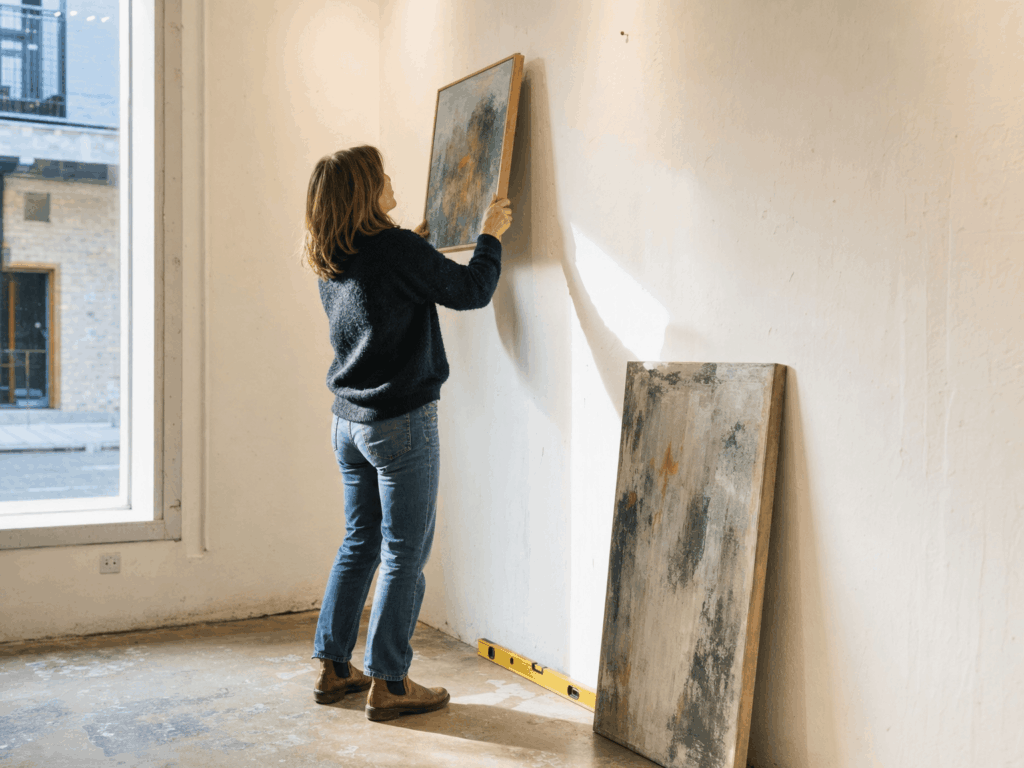
Most of the art hanging in people’s homes was chosen in under ten minutes, usually in a furniture store, usually because the colors matched the sofa. There is nothing wrong with wanting a room to look right. But the difference between a mass-produced print and a piece made by a living artist is a bit like the difference between a greeting card and a letter someone actually wrote to you. One fills a space. The other changes how the space feels, because it carries a decision, a hand, and a specific moment in someone’s working life. When you buy from an independent living artist, you are not just acquiring an object. You are entering a short, quiet relationship with the person who made it, even if you never meet them. That shift sounds sentimental until you live with the work for a few years and notice that you still look at it, still find new things in it, and still remember why you chose it. Decorative prints rarely survive that test. Original work usually does.
What actually changes when the artist is alive and working
Your money funds the next piece, not a licensing department
When you buy a reproduction of a long-dead painter, your money pays a printer, a framer, a distributor, and a retailer. The artist, obviously, gets nothing, and neither does anyone carrying their practice forward. When you buy from a living artist, the picture changes completely. That payment covers studio rent for another month, a fresh order of canvas or clay or pigment, and the plain confidence that comes from knowing someone wanted the work enough to pay for it. Artists talk about this openly: a sale is rarely just income, it is permission to keep going. Independent artists in particular, the ones without institutional salaries or corporate commissions, live and work inside that loop. Every purchase is a direct vote for what gets made next. You become, in a small but real way, part of the supply chain of new work. That is a very different role than being the end point of a poster warehouse.
You bring home context, not just an image
A work by a living artist arrives with information a reproduction cannot carry. You can know when it was made, what the artist was thinking about, what else they were working on at the time, and where this piece sits in the arc of their practice. Sometimes you learn the work was part of a series, or made after a move, or painted over an earlier failed attempt. These details change how you see the piece every time you walk past it. They also change how you talk about it. Guests ask about original art in a way they never ask about prints, and having an actual answer, a name, a place, a story, turns a wall into a conversation. Over time, if you follow the artist’s career, the piece becomes a marker: you owned their work before a museum show, before a prize, before the prices moved. Collectors who started early with artists they believed in will tell you this is half the pleasure of collecting at all.
Why buying through a gallery that represents the artist matters
Curation does the filtering you don’t have time for
The honest problem with buying directly from artists online is volume. There are thousands of people selling work, the quality ranges wildly, and most buyers have no reliable way to tell a developing serious practice from a weekend hobby with good photography. A gallery that genuinely represents its artists solves this. Representation means the gallery has looked at the full body of work, not one flattering image. It means someone with a trained eye has made a judgment and attached their reputation to it. It also means the gallery has a stake in the artist’s long-term career, because a gallery that represents artists only succeeds if those artists keep growing. For a buyer, that alignment is worth a great deal. You are not just trusting a listing, you are trusting a relationship that existed before you arrived and will continue after you leave.
Provenance, pricing, and a record you can rely on
A gallery purchase also gives you paperwork, and paperwork matters more than most first-time buyers realize. You get a clear record of the work’s title, medium, dimensions, year, and origin, which is exactly what you need if you ever insure, resell, or pass the piece on. You also get pricing that sits inside a coherent structure rather than a number the artist invented under pressure the night before. Galleries set prices in relation to an artist’s exhibition history, previous sales, and stage of career, which protects both sides: the buyer is not overpaying on a whim, and the artist is not undercutting their own market out of nervousness. None of this removes the emotional part of buying art. It just means the emotional decision rests on a stable foundation.
Where ZUR Gallery fits into this
If this way of buying appeals to you, ZUR Gallery is a good place to see it in practice. ZUR is a curated gallery representing emerging and established independent Israeli artists, and the word curated is doing real work in that sentence. The gallery does not operate as an open marketplace where anyone can upload anything. Each artist is selected, and each work presented has passed through an actual editorial eye. The result is a collection where an emerging painter at the start of a promising career can hang alongside an established name with decades of exhibitions, and both make sense in the same room. For a buyer, this mix is useful in a practical way. Established artists offer a track record and a degree of reassurance. Emerging artists offer accessible entry points and the particular satisfaction of backing someone early. A gallery that handles both lets you build a collection with range instead of forcing you to choose one approach.
What that means for the artists themselves
For the artists ZUR represents, the arrangement changes daily working life. Representation means someone else handles photography, presentation, buyer questions, and logistics, which returns hours to the studio. It means their work reaches audiences far beyond their own social circle, including collectors abroad who would never have found them otherwise. It means a sale comes with professional handling rather than improvised shipping and awkward price negotiations. Israeli art has a strong, distinct voice, shaped by a dense mix of cultures, histories, and daily intensity, and independent artists working within it deserve infrastructure that matches the quality of what they make. A gallery built around representing them, rather than merely listing them, is that infrastructure.
A practical way to begin
Start small and start specific. Pick one wall in your home that currently holds nothing or holds something you stopped seeing years ago. Browse a curated collection like ZUR’s with that wall in mind, and shortlist three works that make you pause, not three works that merely match your furniture. Read what the gallery says about each artist, because the one whose story stays with you is usually the right choice. Ask the gallery questions before you buy: about the artist, the medium, the framing, the care the piece needs. Then buy one piece, hang it, and live with it for a season. If the experience is what most collectors report, the second purchase will be much easier to justify, and the third will not need justifying at all.